

Professorn inom produktutveckling
Professorn inom produktutveckling
Var nyfiken samt skapa multi-kompetenta team med divergenta kunskaper och erfarenheter!
För drygt ett decennium hade jag förmånen att intervjua professor Olaf Diegel, som då nyligen tillträtt en professur i maskinteknik vid Lunds Universitet i Sverige. Från den intervjun vill jag framhålla några relevanta aspekter:
You are an engineer and had worked which several different competences during your carrier. How will you build the best product development team?
- Engineers are educated the same linear way, and thereby think the same linear way. So to build the best team needs several different competences, educated as well as street-smart competences.
When you have five equal (education, gender, socioeconomic status etc) persons, you have the linear problem right away from start. And this is not positive concerning the development process.
Another way to see it is that the non-trained engineer asks: way can’t we do like this? And the trained engineer rejects the idea direct, according to his/her educational knowledge.
You have lived in several parts of the world, so can you describe the similarities and differences in product development around the world?
- I will say that there is not so much differences between countries or national cultures. The difference is between small or large corporations. The larger corporation, the harder to succeed, or in other words, the bureaucracy rules there.
In New Zeeland most organisations are micro organisations with one or two persons, and the have limited resources in all aspects. Therefore the need to improvise more and take instant decisions. So there is an incorporated need for solving the problem fast, which make an iterative process. This is one explanation why the product development process is more effective in smaller organisations.
Another thing, when arriving to Sweden I went surprised that the Swedish 3D scene, you are behind US, Europe and even New Zeeland! Compare this with the reputation Sweden got as a leader in design and innovation!
But this can be an opportunity: All others have done all the technical work, and Sweden can benefit by doing the implicational work within the 3D scene.
Finally, can you give a good piece of advise to next generation of innovators and product developer?
- Be curious, improvise and iterate! Again, again and again. Try, try and try again, that's the only way to succeed.

Och dessa råd kommer från Olaf som är född i New Zeeland med Schweitziska föräldrar, utbildad i den franska delen av Kanada, i Australien och i Sydafrika, samt har undervisat i Japan och Sverige, och numera är boendes och knuten till universitetet i Auckland, New Zeeland.
Detta är såldes en global medborgare som dessutom själv har upplevt flera outsidersituationer och proklamerar:
- Var nyfiken
- Skapa multikompetenta team med divergenta kunskaper och erfarenheter
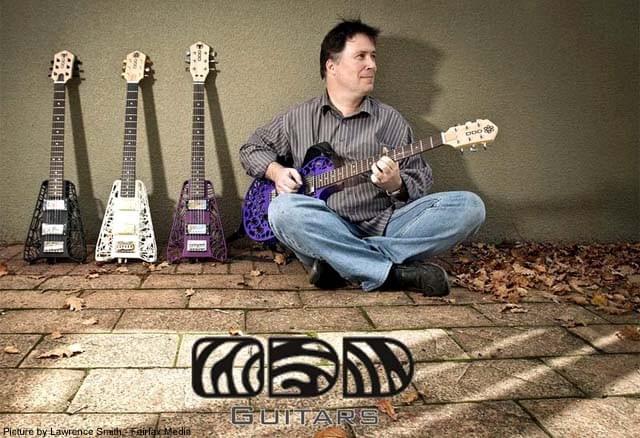
PS: Olaf Diegel är även gitarrkonstruktör.